

How to install a Sump Pump Guide
Basement Sump Pump Systems – Selection, Installation and Maintenance Guide
Step-by-Step Guide – For Illustration Purposes Only
Important notice: This guide is provided for general information and illustration purposes only. It is not a site-specific design, specification or installation instruction. Clever Shield supplies sump chambers, pumps, pumping stations and associated equipment but does not undertake site surveys, design or specify pumping systems, or carry out installation work. Always follow the current manufacturer's technical documentation and obtain project-specific advice from suitably qualified professionals. Electrical work must be carried out by a competent, qualified electrician.
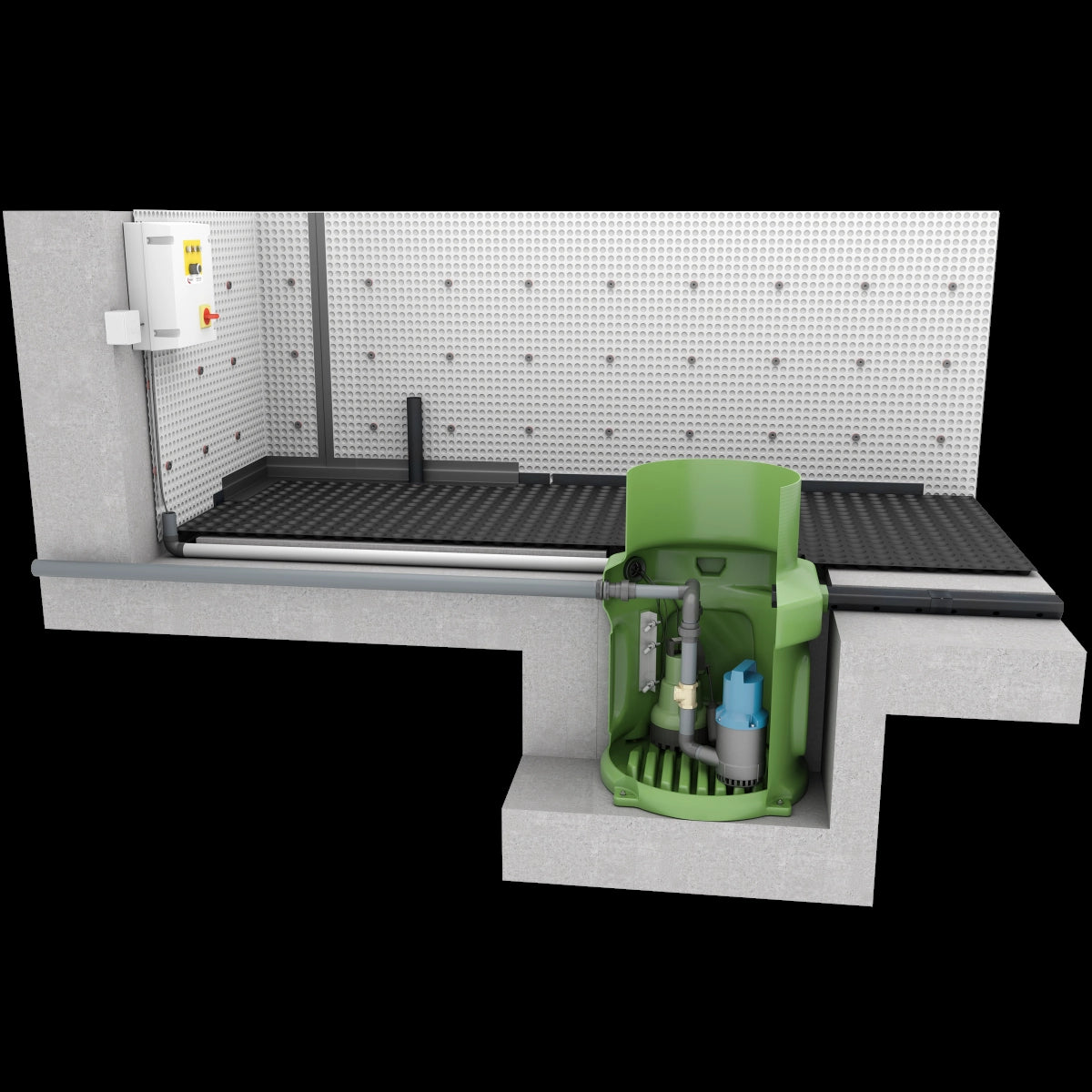
A sump pump system is an important component of many Type C cavity drainage waterproofing systems. Water collected by the drainage channels and floor drainage system is directed towards a sump chamber, where a pump discharges it to a suitable drainage point.
The correct equipment depends on the building, the anticipated water conditions, the drainage arrangement and the required level of protection. This guide explains the main components of a sump pump system, the considerations involved in selecting equipment, and the importance of correct installation and ongoing maintenance.
1. Understanding How a Basement Sump Pump System Works
In a Type C cavity drainage system, water entering the structure is managed rather than relying solely on preventing every point of water ingress. Cavity drain membranes and drainage channels collect and direct water towards a suitable discharge point.
A typical pumped drainage arrangement includes:
- Cavity drain membrane: Installed to the relevant wall and floor surfaces as part of the Type C system.
- Perimeter drainage channel: Collects water and directs it towards the sump chamber.
- Sump chamber: Provides a collection point for incoming water.
- Submersible pump: Automatically discharges collected water when the operating level is reached, where an automatic pump is used.
- Discharge pipework: Carries pumped water to the approved discharge destination.
- Alarm and backup equipment: Provides additional warning and resilience, depending on the system selected.
The exact arrangement varies according to the waterproofing system and pumping equipment selected. Components must be compatible and installed in accordance with the relevant manufacturers' instructions.
2. Key Considerations When Selecting a Sump Pump System
Selecting a sump pump is not simply a matter of choosing a pump based on its physical size. The complete system needs to be suitable for the expected water conditions and the discharge requirements.
Important factors to consider include:
- Application: Whether the system is intended for groundwater, surface water, grey water or foul wastewater. These applications can require different pump types.
- Flow rate: The volume of water the pump needs to discharge over a given period.
- Total dynamic head: The vertical lift and pipework resistance that the pump must overcome.
- Chamber capacity: The available storage volume and the number of pumps required.
- Solids handling: Whether the water may contain suspended solids or other material that affects pump selection.
- Power supply: The electrical requirements of the pump and any associated controls.
- Alarm provision: Whether a high-level water alarm is required or recommended.
- Backup arrangements: Whether battery backup or a secondary pump is appropriate for the application.
- Maintenance access: Whether the chamber, pump, controls and pipework can be inspected and serviced after installation.
Where a system forms part of a basement waterproofing installation, the pumping arrangement should be considered alongside the complete drainage system. The project designer or responsible waterproofing professional should establish the appropriate requirements.
3. Sump Chambers and Pump Configurations
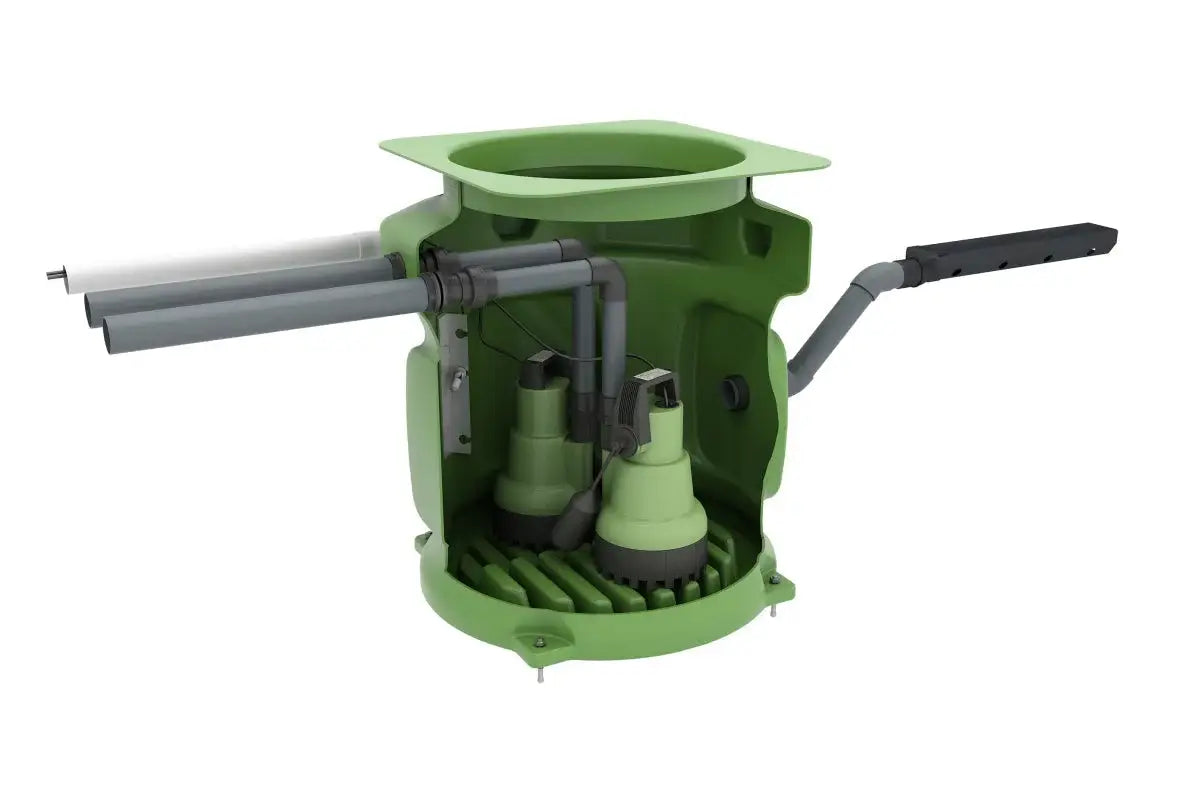
Sump chambers are available in different sizes and configurations to suit a range of installations. The chamber provides a collection point for incoming water and houses the pump equipment where the selected system is designed for this arrangement.
Single-pump systems
A single-pump arrangement uses one pump to discharge collected water. The pump may operate automatically through an integral float switch or a separate control arrangement, depending on the model.
Twin-pump systems
Twin-pump arrangements use two pumps within a shared system. Depending on the control equipment, the pumps may operate alternately, operate together when required, or provide a degree of standby capacity.
A twin-pump arrangement does not automatically guarantee uninterrupted operation. The control strategy, electrical supply, alarm provision and system design all need to be considered.
Packaged pumping stations
Packaged pumping stations combine a chamber with selected pumps and associated components. They are available for different applications, including groundwater, surface water and foul wastewater. The correct station must be selected for the intended use.
Explore the Clever Shield range of basement pump chambers, pumps and alarms.
4. Pump Systems and Manufacturers Available from Clever Shield
Clever Shield supplies a range of sump chambers, submersible pumps, packaged pumping stations, controls and backup equipment from established manufacturers. Our range includes solutions for domestic, commercial and other building applications.
- Clever Shield – CleverSump: Our own packaged pumping system range.
- DAB FEKA Pumps: Submersible pumps for sewage and wastewater applications.
- Edincare: Sump pumps, packaged pumping stations, alarms and associated equipment.
- Newton Waterproofing: Pump chambers and pumping systems for foul water, surface water and basement drainage applications.
- PPS: Packaged pump stations, sump pumps and associated backup equipment.
- Victron: Inverter and battery equipment used in suitable pump backup arrangements.
- Wykamol: Sump chambers, pumps and pumping station equipment for basement drainage systems.
We also supply associated equipment including high-level water alarms, pump controls, non-return valves, pipework, fittings and battery backup products.
View the full basement pumps, chambers and alarm range or browse our sewage and wastewater pumps.
5. Planning a New-Build Sump Installation
In a new-build project, the sump chamber location and installation arrangement should be considered at the design and construction planning stages.
Depending on the selected chamber and project requirements, installation may involve:
- Allowing for the chamber dimensions and required access.
- Preparing the excavation or formed opening to the manufacturer's requirements.
- Providing the specified base and support arrangement.
- Positioning and securing the chamber in accordance with the manufacturer's instructions.
- Making provision for incoming drainage channels and discharge pipework.
- Coordinating the electrical supply, controls and alarm arrangements.
- Ensuring the finished floor and access cover arrangement allows future inspection and servicing.
Structural considerations, including resistance to flotation and the method of surrounding or supporting the chamber, must be assessed for the particular installation. Do not assume that one concrete base thickness or installation detail is suitable for every chamber or site.
6. Retrospective Sump Installations
Retrofitting a sump chamber into an existing basement or below-ground structure can involve additional considerations. The existing floor construction, ground conditions, incoming water routes and available discharge position all need to be assessed.
Work may involve forming an opening in the existing floor slab and preparing an excavation for the chamber. Before any breaking-out or excavation takes place, the structure and the location of buried services must be considered by the responsible professionals.
The chamber must be installed and secured in accordance with its manufacturer's instructions. The surrounding construction must be suitable for the ground and water conditions, and the finished installation must retain suitable access for inspection and maintenance.
Retrospective installations should be planned and undertaken by appropriately qualified and experienced contractors.
7. Pump Pipework, Discharge and Electrical Connections
The discharge arrangement is an important part of the overall pumping system. Pipework must be suitable for the selected pump, the required flow rate, the operating pressure and the intended discharge destination.
Considerations include:
- Correct pipe diameter and material for the pump and application.
- Pipework routing and the total resistance created by bends, fittings and vertical lift.
- Suitable non-return valves where required by the system design.
- Accessible isolation and maintenance arrangements where specified.
- A suitable and lawful discharge destination.
- Protection against freezing or physical damage where relevant.
- Electrical supply, control equipment and alarm connections in accordance with the manufacturer's requirements.
Do not assume that all pumps use the same pipe material, connection size or valve arrangement. Always follow the pump manufacturer's installation instructions and the requirements of the complete system.
Electrical installation, connection and commissioning must be carried out by a competent, qualified electrician. Any battery backup or inverter equipment must be compatible with the pump and its electrical requirements.
8. High-Level Alarms and Battery Backup
A high-level water alarm can provide an early warning if water in the chamber rises above its normal operating level. This may help alert the property owner or maintenance team to a pump fault, power interruption or other issue requiring attention.
Battery backup equipment can provide an additional level of resilience during a mains power failure, where a compatible system is installed. The available backup period depends on the equipment, battery capacity, pump load and operating conditions.
For some installations, a twin-pump arrangement, independent alarm or backup power system may be appropriate. These measures should be selected according to the consequences of pump failure and the requirements of the project.
Explore our pump chambers and alarm systems and Victron inverter and pump battery equipment.
9. Sump Chamber Location and Maintenance Access
The position of the sump chamber should be established as part of the overall drainage layout. It should allow incoming drainage channels to connect correctly and provide a suitable route for the discharge pipework.
Important practical considerations include:
- Access for inspection, pump removal and maintenance.
- Suitable positioning in relation to the drainage channels.
- A practical route for discharge pipework.
- Space for electrical connections, controls and alarm equipment.
- Access to the chamber cover once the surrounding floor finishes are complete.
- Protection against accidental damage and unauthorised access.
The access cover should remain accessible after the installation is finished. It should not be permanently concealed beneath flooring, fitted furniture or other obstructions.
10. Sump Pump Maintenance and Inspection
Regular inspection and maintenance help keep a pumping system operating as intended. The maintenance schedule and procedures should always follow the pump and chamber manufacturers' instructions and reflect the operating conditions.
Typical maintenance considerations include:
- Checking the chamber for silt, debris or other material that could affect operation.
- Inspecting the pump and checking that it operates correctly.
- Checking float switches, level sensors and control equipment.
- Testing high-level alarms in accordance with the manufacturer's instructions.
- Inspecting accessible pipework, valves and connections.
- Checking battery condition and backup equipment where fitted.
- Arranging professional servicing at the intervals recommended by the manufacturer.
Do not rely solely on the fact that a pump has not generated an alarm. Regular inspection and appropriate testing are important, particularly where a pump system provides protection against water ingress to a basement or below-ground area.
11. Choosing the Right Pumping Equipment
The most suitable pumping equipment depends on the type of water being handled, the required flow and head, the chamber arrangement and the intended application.
For example, a groundwater sump pump for a Type C basement drainage system may have different requirements from a foul wastewater pumping station. A pump intended for one application should not be assumed suitable for another.
Before purchasing, check the relevant manufacturer's technical information for:
- Permitted application and liquid type.
- Maximum flow rate and pump head performance.
- Solids handling capability, where applicable.
- Power supply and electrical requirements.
- Required chamber dimensions and installation configuration.
- Control, alarm and backup compatibility.
- Maintenance requirements and operating limitations.
Clever Shield supplies a wide range of pumping equipment from established manufacturers. Product specifications, availability and manufacturer documentation can be found on the relevant product pages.
12. Why Choose Clever Shield?
- Wide range of pumping equipment: Sump pumps, chambers, packaged pumping stations, alarms and backup products.
- Established manufacturers: Products from Clever Shield, DAB FEKA, Edincare, Newton, PPS, Victron and Wykamol.
- UK-wide supply: Delivery to customers throughout the UK.
- Product information: Manufacturer technical documentation and product details available through our website.
- Trade supply: Options for contractors, installers and commercial customers.
Browse our complete basement pumps, chambers and alarms or explore our wider sewage and wastewater pump range.
Frequently Asked Questions
What does a sump pump do in a basement?
A sump pump removes water collected in a sump chamber and discharges it to a suitable drainage point. In a Type C cavity drainage system, it can form part of the arrangement used to manage water collected by the drainage channels and membranes.
Do I need a single or twin sump pump system?
This depends on the application, expected water conditions and the required level of resilience. Twin-pump systems can provide additional pumping capacity or standby capability, depending on their control arrangement. The appropriate configuration should be established for the project.
What is the difference between a groundwater pump and a foul water pump?
Groundwater pumps are selected for the collection and discharge of groundwater, while foul water pumps are designed for wastewater containing sewage and other solids. Pump selection must match the intended liquid and application.
Should a sump pump system have a high-level alarm?
A high-level alarm can provide an important warning if water rises above the normal operating level. It is a useful consideration for basement pumping systems, particularly where pump failure or power interruption could have serious consequences.
How often should a sump pump be serviced?
Follow the manufacturer's recommended inspection and servicing schedule. The appropriate frequency depends on the pump, the system configuration and the operating conditions.
Can a sump pump operate during a power cut?
A standard mains-powered pump will not normally operate during a power failure. A compatible battery backup or alternative power arrangement may provide continued operation for a limited period, depending on the equipment and battery capacity.
Explore Basement Pumps and Pumping Systems
Clever Shield supplies sump chambers, drainage pumps, packaged pumping stations, alarms and backup equipment for a wide range of applications.
Shop Basement Pumps, Chambers and Alarms
Shop Sewage and Wastewater Pumps
Clever Shield – Asset Protection: Roof to Basement and Beyond!
For product enquiries, call 01268 472358 or email info@clevershield.co.uk.
This guide is provided for general information and illustration purposes only. It does not constitute a site-specific design, specification or installation instruction. Clever Shield Limited supplies products and materials but does not undertake site surveys, design or specify systems, or carry out installation work. Product selection, system design, installation, commissioning and maintenance must be undertaken by suitably qualified professionals in accordance with current manufacturer documentation, applicable regulations and project requirements.