
How to Install HydraFlex – Flexible Tanking Membrane
Installation overview — flexible tanking for walls & floors (illustration only)
⚠️ Important Disclaimer:
This guide is provided for illustration purposes only. It is not an installation manual and does not replace manufacturer instructions, professional design, or building regulations. Site conditions vary. Clever Shield Coatings Ltd accepts no liability for actions taken based on this information. Always follow current product data sheets and consult competent professionals.
This guide is provided for illustration purposes only. It is not an installation manual and does not replace manufacturer instructions, professional design, or building regulations. Site conditions vary. Clever Shield Coatings Ltd accepts no liability for actions taken based on this information. Always follow current product data sheets and consult competent professionals.
1. What is HydraFlex?
HydraFlex is a flexible, polymer-modified waterproofing membrane designed to form a continuous barrier (Type A protection) against moisture and water ingress on masonry and concrete. Its flexibility helps accommodate minor movement and hairline cracking, making it suitable for below-ground walls, wet areas, service rooms and floor slabs.
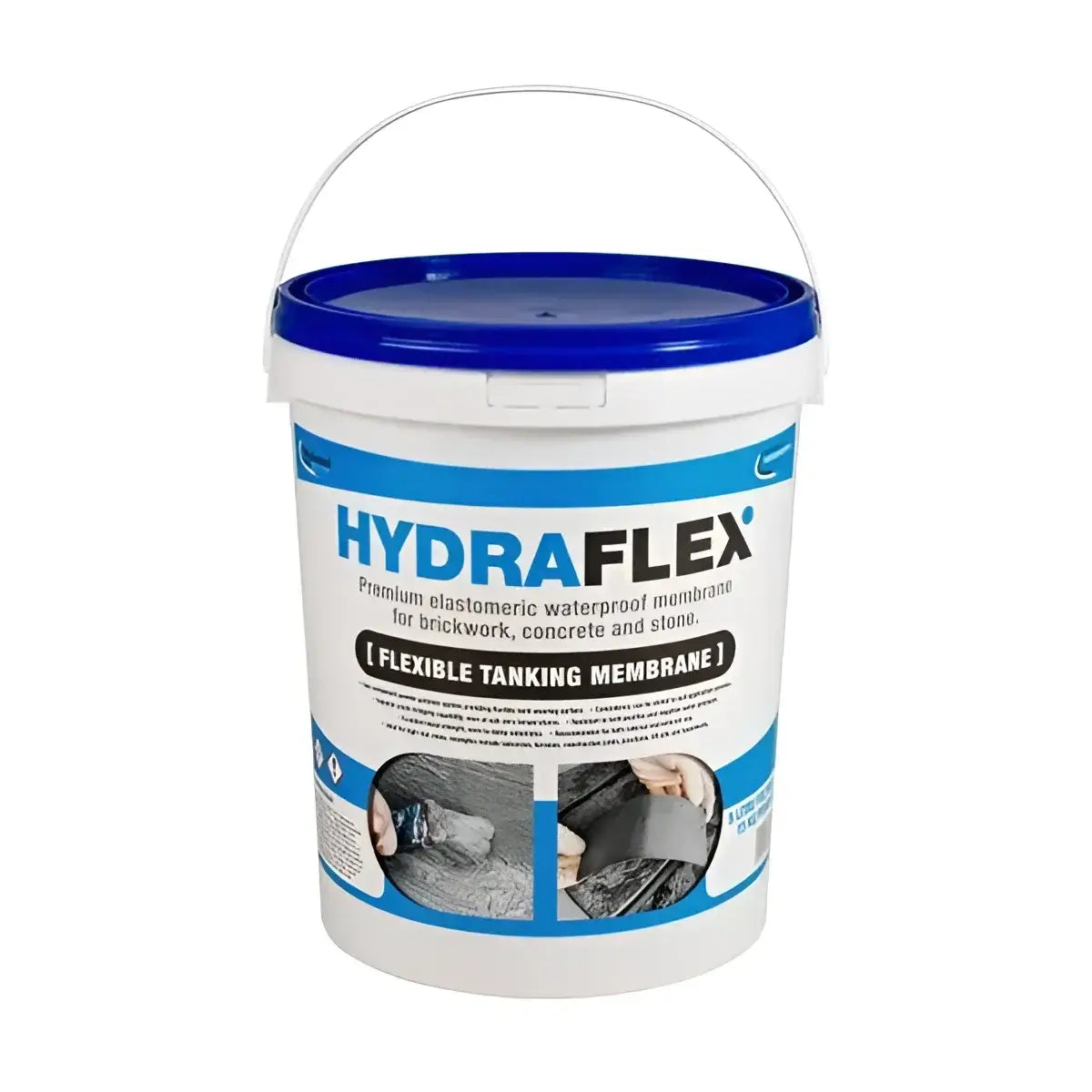
2. Suitable substrates & areas
- Concrete, blockwork, brickwork and sound render/screed.
- Internal faces of basements, cellars and retaining structures.
- Wet rooms, plant rooms, service risers and floor slabs (as specified).
- Not suitable over weak, friable, dusty or contaminated surfaces without prior preparation.
3. Safety & preparation
- PPE: Gloves, eye protection and a suitable mask/respirator when mixing, cutting or grinding.
- Defects first: Repair cracks, blow-holes and honeycombing. Stop active leaks with a rapid-setting plugging compound.
- Surface prep: Remove paint, oils, laitance and loose material. Mechanically prepare to a clean, open-pore finish.
- Fillets: Form concave cementitious fillets at wall–floor junctions and internal corners to reduce stress.
- Conditioning: Lightly dampen absorbent substrates (SSD) if the data sheet permits—no standing water.
4. Tools & materials
- HydraFlex flexible tanking membrane (as specified)
- Compatible primer/bond coat (if required)
- Cementitious repair mortar & rapid-setting plug (prep/fillets/leaks)
- Brush/roller/trowel or spray equipment; mixing paddle and bucket
- Reinforcing mesh/band for changes of plane and local crack bridging (if specified)
- Protection/drainage board for backfilled areas
5. Priming & junctions
- Prime substrates where required to control suction and improve adhesion.
- Form fillets (typically 25–40 mm radius) at internal corners and wall–floor junctions.
- Detail penetrations (pipes, bolts) with sleeves/sealants to allow a continuous membrane.
6. First coat application
- Apply the first coat by brush, roller, trowel or spray per the product guidance.
- Work firmly into pores/pinholes to ensure full contact and even coverage.
- Observe the specified wet-film thickness; avoid thin or translucent areas.
7. Reinforcement & crack bridging
- While the first coat is fresh (or as directed), embed reinforcing mesh/band at internal corners, changes of plane, around penetrations and across hairline cracks.
- Ensure overlaps of reinforcement meet or exceed the system minimum.
8. Second coat application
- Allow the first coat to reach initial cure (finger-firm) based on site conditions.
- Apply the second coat at 90° to the first (cross-hatch) for uniformity and continuity.
- Extend coating beyond visibly damp zones onto sound substrate for a robust lap.
9. Floors & wall–floor junctions
- Prepare slabs as per walls; remove weak laitance and contaminants.
- Coat floors continuously and up the wall onto the fillet to create a tanked tray.
- Protect coated floors from early traffic; follow cure times before screeds/finishes.
10. Curing, protection & finishing
- Protect fresh coats from rapid drying, frost, direct rain/water impact and abrasion.
- Respect cure times before applying renders, insulation boards, tiles or other finishes.
- Use compatible breathable finishes where required; avoid solvent-based products directly on the membrane unless approved.
11. Integration with other systems
- For higher-risk basements, combine HydraFlex (Type A) with a Type C drained cavity system (stud membranes, perimeter channels, sump & pump) to improve resilience and serviceability.
- Ensure clean transitions to membranes, terminations into chases, and sealed laps at thresholds/columns/steps.
12. Quality checks & common pitfalls
- Pinhole/holiday risk: Inadequate prep or thin application—re-coat locally to reinstate continuity.
- Poor adhesion: Occurs on dusty, painted or contaminated substrates—mechanical prep is essential.
- Junction failures: Omitting fillets or reinforcement at changes of plane—always detail critical junctions.
13. Product availability
All components for this system—HydraFlex flexible tanking membrane, primers, cementitious repair/fillet mortars, reinforcement bands/mesh, protection boards, plus complementary cavity drain membranes, channels and sump & pump kits—are available directly from Clever Shield Coatings. Use the website search bar or browse our product categories to find what you need.
⚠️ Legal Notice:
This content is a general, illustrative overview. It is not manufacturer guidance and may not suit all properties. Specifications, regulations and recommended methods can change. Clever Shield Coatings Ltd provides this information “as-is” without warranty. Always follow current product data sheets, relevant standards and consult qualified professionals before commencing work.
This content is a general, illustrative overview. It is not manufacturer guidance and may not suit all properties. Specifications, regulations and recommended methods can change. Clever Shield Coatings Ltd provides this information “as-is” without warranty. Always follow current product data sheets, relevant standards and consult qualified professionals before commencing work.