
What Membrane Tape Do I Need?
Selection & application overview — Wykamol membrane tapes (illustration only)
⚠️ Important Disclaimer:
This guide is provided for illustration purposes only. It is not an installation manual and does not replace manufacturer instructions, professional design, or building regulations. Site conditions vary. Clever Shield Coatings Ltd accepts no liability for actions taken based on this information. Always follow current product data sheets and consult competent professionals.
This guide is provided for illustration purposes only. It is not an installation manual and does not replace manufacturer instructions, professional design, or building regulations. Site conditions vary. Clever Shield Coatings Ltd accepts no liability for actions taken based on this information. Always follow current product data sheets and consult competent professionals.
1. Why tapes matter in Type C systems
In cavity drain (Type C) waterproofing, joints and interfaces are the highest risk points. Correct tape choice ensures sealed laps, reliable transitions (e.g., floor upstands, channels), and robust detailing at corners and penetrations—helping maintain system continuity and performance.
2. The Wykamol tape family — what each one does
- Sealing Rope (butyl bead): Compressible bead for primary seals at laps and interfaces. Often used behind lap joints and around penetrations before taping over. Great for uneven substrates due to its compressibility.
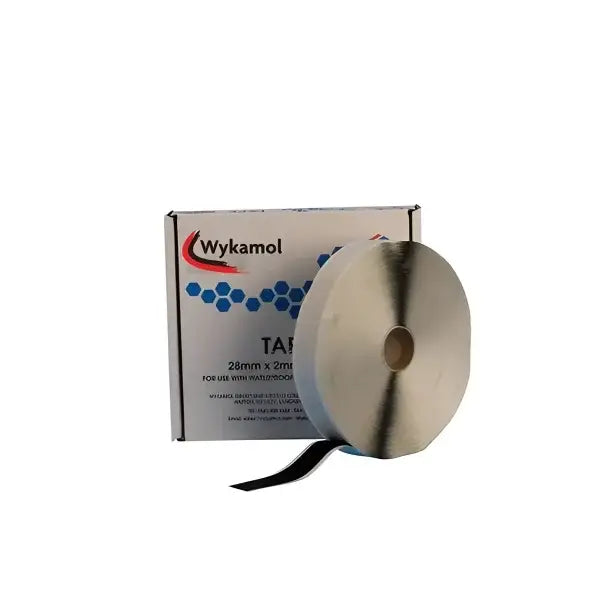
- Membrane Tape / Double sided Joint Tape (butyl strip): General-purpose lap joint tape for sheet-to-sheet joints on walls or floors. Provides the main airtight/watertight seal over compressed laps (frequently used with Sealing Rope beneath).
- Overseal Tape (wider butyl strip): A wider, forgiving tape for secondary sealing and perimeter upstands. Ideal for sealing along edges, over fixings, or as an additional security band on critical joints.
- Corner/Detail Tape (pre-slit/flexible band): For changes of plane (internal/external corners, wall–floor junctions, steps, columns). Helps the membrane follow tight bends while keeping the seal continuous.
- Fibre/Plaster Reinforcement Tape (mesh-faced): For finishing onto mesh membranes (e.g., CM3 Mesh) to reduce cracking in plaster at joints and fixings. Not a waterproofing seal—used for finish quality.



3. Quick selector — which tape for which detail?
| Detail | Recommended product(s) | Notes |
|---|---|---|
| Sheet-to-sheet lap (walls) | Sealing Rope + Membrane Tape | Rope behind the lap for compression; Membrane Tape over the lap to finish. |
| Sheet-to-sheet lap (floors) | Sealing Rope + Membrane Tape | Keep substrates clean/dry. Weight lightly to consolidate. |
| Perimeter upstand (floor to wall) | Sealing Rope + Overseal Tape | Form tray upstand; seal junction to wall or channel lid where designed. |
| Corners & changes of plane | Corner/Detail Tape (+ Rope where needed) | Pre-form tape into the corner; avoid stretching the butyl. |
| Fixings, plugs & penetrations | Sealing Rope + Overseal or Membrane Tape | Bed the penetration on rope; over-band with tape to finish. |
| Plaster reinforcement on mesh membranes | Fibre/Plaster Reinforcement Tape | For cosmetic/finish strength; not a waterproofing seal. |
4. Surface prep — make the tape stick
- Surfaces must be clean, dry and dust-free. Brush/vacuum thoroughly.
- Wipe membrane faces where needed; avoid oils/grease. In cold conditions, gently warm tapes (not hot) to improve tack.
- Lay out pieces before peeling liners to avoid handling errors.
5. Typical lap joint (illustration only)
- Overlap the membrane sheets per design (e.g., one stud or as specified).
- Run a continuous Sealing Rope bead behind the lap at the overlap line; gently compress.
- Apply Membrane Tape centred over the lap; press firmly from one end to the other to exclude air.
- Roll or hand-press to consolidate; avoid trapping debris or creases.
6. Perimeter upstand & channel interface
- Turn floor membrane up the wall (typically 50–100 mm) to form a tray.
- Bed the upstand or channel edge on Sealing Rope where required by design.
- Apply Overseal Tape along the junction as a wide secondary seal.
- Maintain access to inspection/flush points; do not tape over serviceable lids.
7. Corners & penetrations (illustration only)
- Corners: Pre-form Corner/Detail Tape into internal/external corners; add Sealing Rope beneath if the substrate is uneven.
- Pipes/fixings: Seat the penetration on Sealing Rope; over-band with Overseal or Membrane Tape to finish.
8. Quality checks & common pitfalls
- Gaps at laps: use continuous rope and maintain tape pressure from end to end.
- Dusty faces: clean before taping—dust kills adhesion.
- Cold substrates: gently warm tape to improve tack; do not over-stretch butyl.
- Hidden routes: never tape over access/flush points or components requiring service.
9. Product availability
All items referenced—Wykamol Sealing Rope, Membrane Tape, Overseal Tape, Corner/Detail Tape, and Fibre/Plaster Reinforcement Tape—are available directly from Clever Shield Coatings. Use the website search bar or browse our product categories to find what you need.
⚠️ Legal Notice:
This content is a general, illustrative overview. It is not manufacturer guidance and may not suit all properties. Specifications, regulations and recommended methods can change. Clever Shield Coatings Ltd provides this information “as-is” without warranty. Always follow current product data sheets, relevant standards and consult qualified professionals before commencing work.
This content is a general, illustrative overview. It is not manufacturer guidance and may not suit all properties. Specifications, regulations and recommended methods can change. Clever Shield Coatings Ltd provides this information “as-is” without warranty. Always follow current product data sheets, relevant standards and consult qualified professionals before commencing work.